Η Ελλάδα δίδαξε τον κόσμο να παίζει
Greece taught the world to play
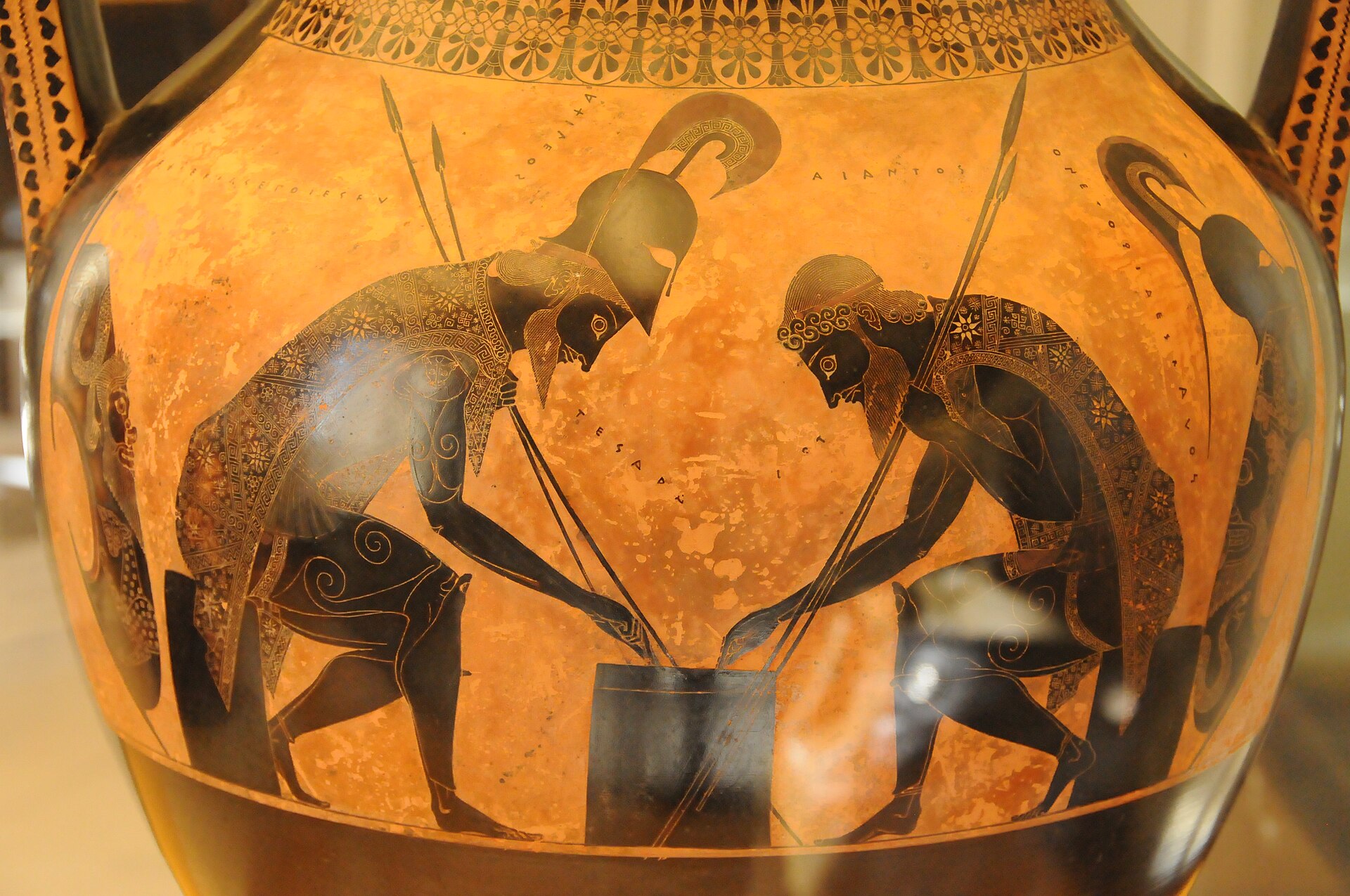
Twenty-five centuries ago an Athenian painter caught Achilles and Ajax stealing a quiet game between battles, and fired the scene onto an amphora that still survives. Games are a Greek invention, a Greek export and a Greek art form. Today they are also the largest entertainment industry on earth, and almost none of it happens in Greece. This page is about changing that.
Exekias school, black-figure amphora, c. 530 BC. Achilles and Ajax at a board game.
Play was born here
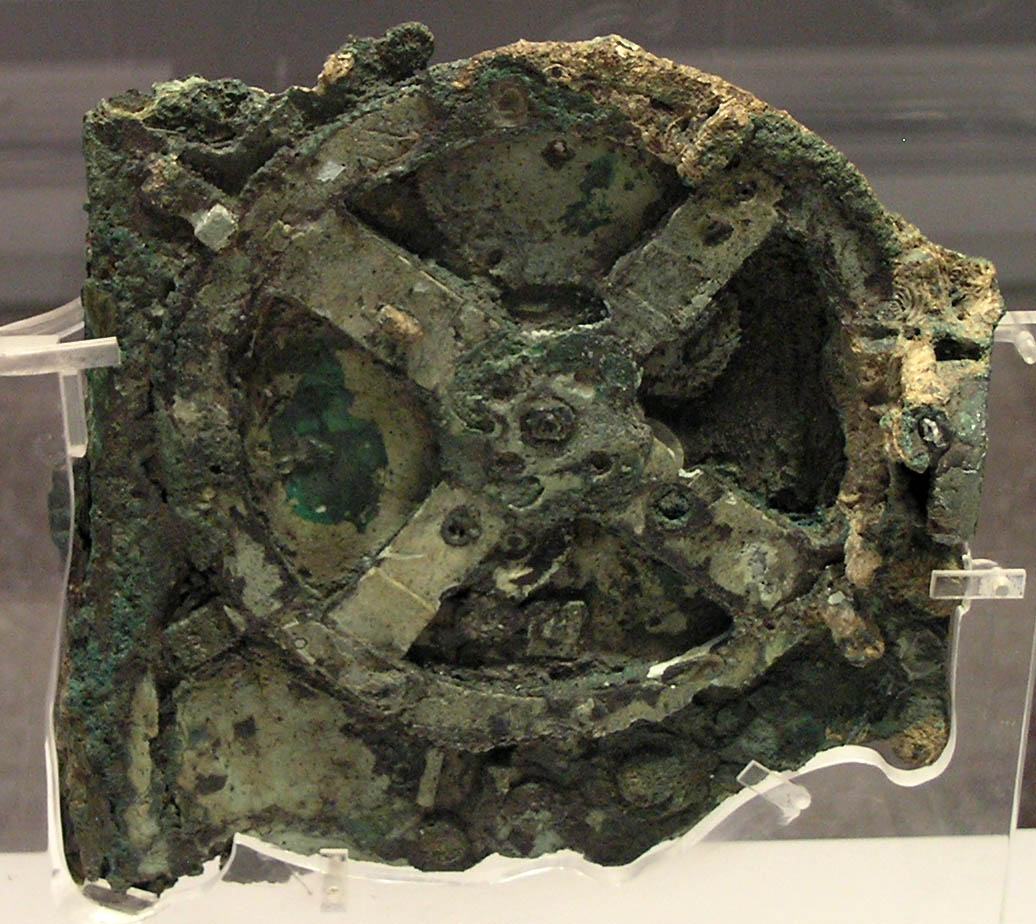
Long before anyone spoke of an industry, Greeks organised play into culture. The Olympic Games turned contest into civic religion and kept the calendar of the ancient world for a thousand years. Poets turned memory into interactive performance, epics retold and reshaped with every audience. And in a wreck off Antikythera, divers found a bronze machine of some thirty meshed gears that predicted eclipses and the wander of planets, built two thousand years before anyone else managed anything like it. The world's first computer was Greek, and what it computed was, in a sense, a game board of the heavens.
Three thousand years of characters, monsters, tragedies and islands sit in this country's cultural memory. That inheritance is usually discussed as heritage, something to conserve. The games industry is the one modern business where it behaves instead like an engine, because interactive entertainment is built out of exactly what Greece has in surplus, which is stories, mathematics and light.
The Antikythera mechanism, c. 100 BC. Thirty-odd bronze gears computing the sky. National Archaeological Museum, Athens.
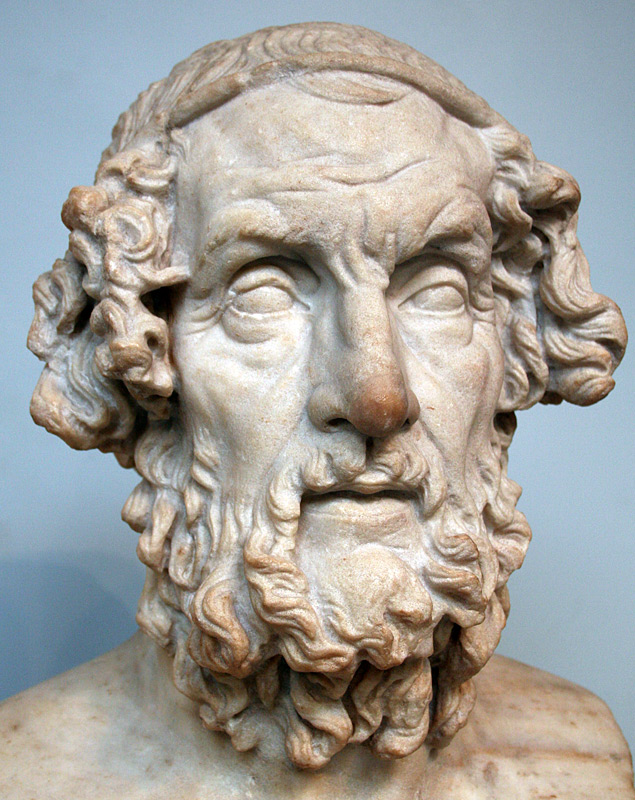
Homer, Hellenistic portrait type, British Museum. The most adapted author in video game history.
The world already plays Greek
Video games earned roughly $188.8 billion worldwide in 2025, more than cinema and recorded music together.
Inside that market, Greek stories are not a niche. They are a proven blockbuster genre that other countries keep cashing.
Ubisoft set Assassin's Creed Odyssey in the Peloponnesian War and sold around ten million copies, reaching more than forty million players once subscriptions are counted, from studios in Paris and Quebec. A twenty-person team at Supergiant in San Francisco made Hades from the house of the Greek dead, sold a million copies within days, and by tracker estimates has passed seven million on Steam alone. Meanwhile Poland took its own folklore and built The Witcher, eighty-five million copies sold, an entire national industry seeded by one saga told at home.
The lesson from Warsaw is uncomfortable and useful in equal measure. Mythology pays best in the country that tells it, and at the moment Greek myth pays other flags.
National mythology, monetised elsewhere
Copies sold, latest verified public figures. Pass over each bar for the story behind it.
Sources: CD Projekt investor communications; Ubisoft FY2019 earnings and player-milestone reports; Supergiant Games and Steam sales trackers, where the Hades figure is an estimate.
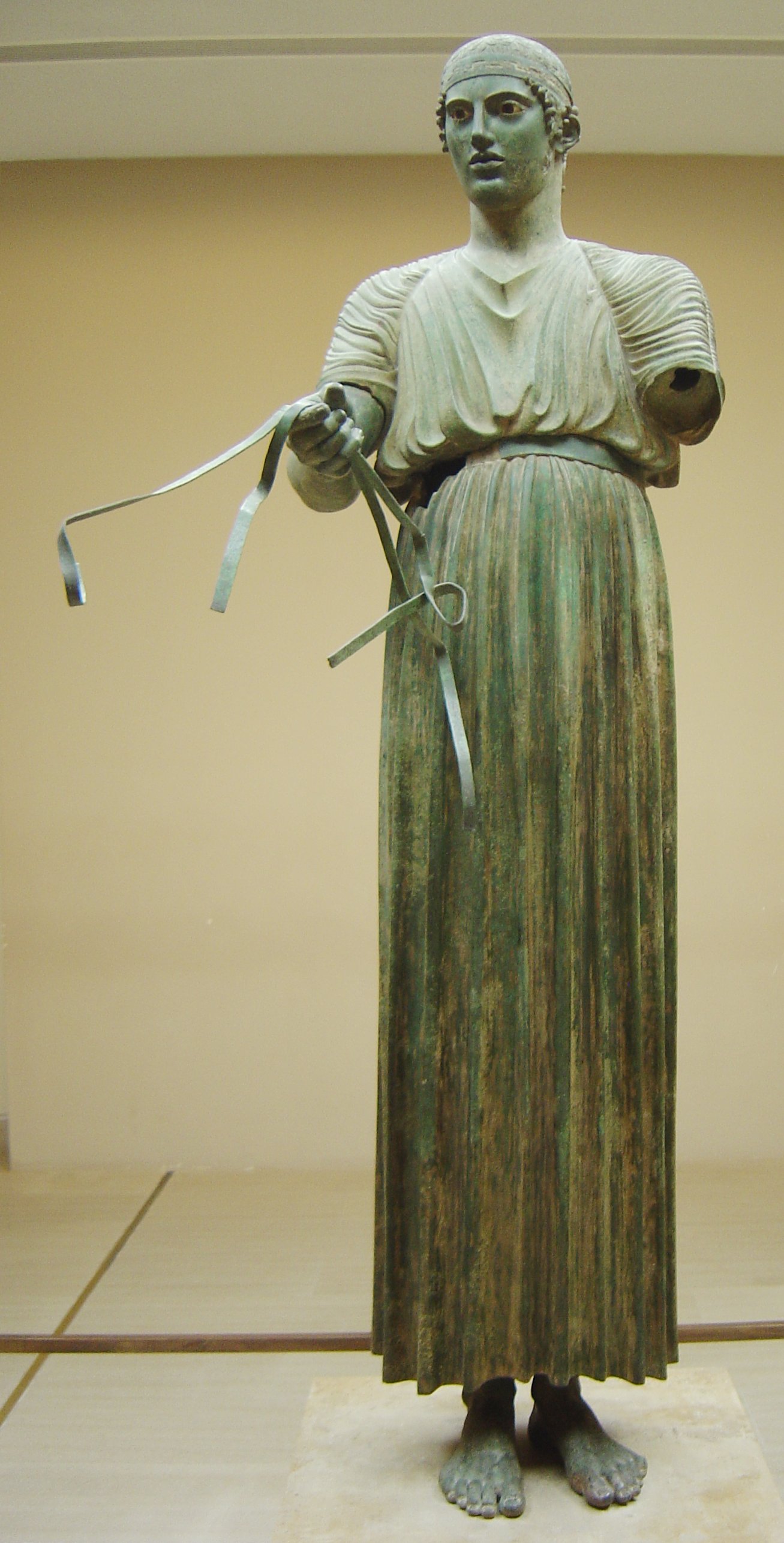
The Charioteer of Delphi, bronze, c. 470 BC. Delphi Archaeological Museum.
Cast for a race already won
The Charioteer was cast around 470 BC to celebrate a chariot victory in the Pythian Games and dedicated at the sanctuary of Apollo at Delphi. He stands entirely still, reins loose in one hand, eyes level, a young man shown in the moment after the finish line rather than the scramble before it. The bronze survived because an earthquake buried it, and it remains one of the very few Greek originals the world can still look in the eye.
That is the posture this page is arguing for. The race described next is already being run by Greece's neighbours, and the countries winning it are the ones that decided early, funded the pilot and let the drivers drive. Greeks used to commission monuments to finishing first. The habit is worth reviving.
Six neighbours are running the race
Every serious games nation in Europe began roughly where Greece stands now, with a handful of studios and no obvious reason to believe, and then each of them pulled a deliberate lever. One candour note: each card shows the strongest figures that country's own bodies publish, on national definitions rather than one common basis, so read them as scale, not as a single league table.
Poland
Game exports, 2024€1.29B
Studios824
Specialists employed14,568
The state seeded the industry with more than 200 million złoty of GameINN research grants while The Witcher carried Slavic folklore to the world, and within fifteen years a mid-income economy had become Europe's game-export champion. Poland remains the closest template Greece could follow.
Turkey
Earned worldwide, 2025$2.76B
Peak Games exit$1.8B
Dream Games valuation~$5B
The neighbourhood's fastest mover keeps proving the flywheel: Peak, the studio behind Toon Blast and Toy Blast, exited to Zynga; Peak alumni built Dream Games, whose Royal Match anchors the next wave; and the founders reinvest under a state that keeps the paperwork short. Momentum on this scale a few hundred miles from Athens makes waiting expensive.
Finland
Industry revenue, 2024€2.85B
Studios270
International workforce37%
When Nokia fell, games absorbed the talent and turned a national shock into a sector, and the detail that matters most for a country fighting a brain drain is that Finnish studios now import workers from around the world rather than lose their own.
Sweden
Industry revenue, 2024$7.7B
Companies1,101
Employees9,130
Minecraft and Candy Crush were both built here, and the origin was access rather than tax policy, because the 1998 Home PC Reform put a computer into ordinary homes a decade early and let the culture do the rest.
United Kingdom
Sector value added£12B
Return per £1 of relief£4
Tax paid back yearly£2.2B
The Treasury's own evaluation settles the argument about whether games relief is a cost, since every pound of it returns four to the economy and the sector still pays billions back in tax. Relief at this scale is an investment with a published return.
Ireland
Digital games credit32%
Registered studios92
Ireland is the warning label on this page, because a generous credit without talent pipelines, funding and connective institutions has produced strikingly little. Greece should copy the machine around the number rather than the number alone.
Greece
Comparable registered studios44
Greeks who play, ages 6 to 644M
2026 games line€2m
The starting grid. Every country above began with less than this already on the table, and the distance between their cards and this one is not a forecast of anything; it is the work the rest of this page proposes.
One dot, one studio
Registered game studios, latest verified national counts, drawn one dot per studio inside each country. Greece in gold.
Every country is drawn at the same dot density. Hover over one, or tap it, and its studios take their real places on the map, spreading from the capital.
Sweden 1,101 · Poland 824 · Finland 270 · Ireland 92 · Greece 44. Turkey and the UK omitted for lack of a comparable single count. Sources: Dataspelsbranschen, PARP, Neogames, Imirt, Hellenic Games Database.
Aegean rendered in Unreal Engine 5
Νόστος
Nostos · the Greek word for the journey home
A million working-age Greeks left in a decade. The question every family still asks is what there would be to come back to.
Greece already holds the pieces
Between 2010 and 2022 around 1.08 million people left Greece, most of them young and educated. Then something turned. In 2023, for the first time in the crisis era, more people arrived than departed, roughly 47,200 in against 32,800 out. The returners are exactly the cohort a games industry employs, and games are one of the few export industries that genuinely do not care which country the desk is in.
The turn, in one figure
People arriving in and leaving Greece, 2023: the first net inflow of the crisis era.
The raw material is already on the table. The Recovery and Resilience Facility gives Greece €36.6 billion, with over a fifth of it earmarked for digital transition. Foreign direct investment reached about €6 billion in 2024, and Microsoft and Google are both building a presence here. Average wages of about €18,000 against an EU average near €39,800 leave room for an industry that lifts both sides of the deal, because studio salaries pull Greek pay upward while still costing a founder far less than an equivalent team in London or San Francisco, in a country people actively want to live in. On the standard European industry definition of ages six to sixty-four, around four million Greeks already play.
Even the first policy piece exists. EKKOMED's incentive returns 10 per cent of prototype costs and 30 per cent at completion, capped at €1 million per work, and a dedicated €2 million games pot has been identified for 2026 and is expected to activate. Small, but real, and a pilot light is what you scale.
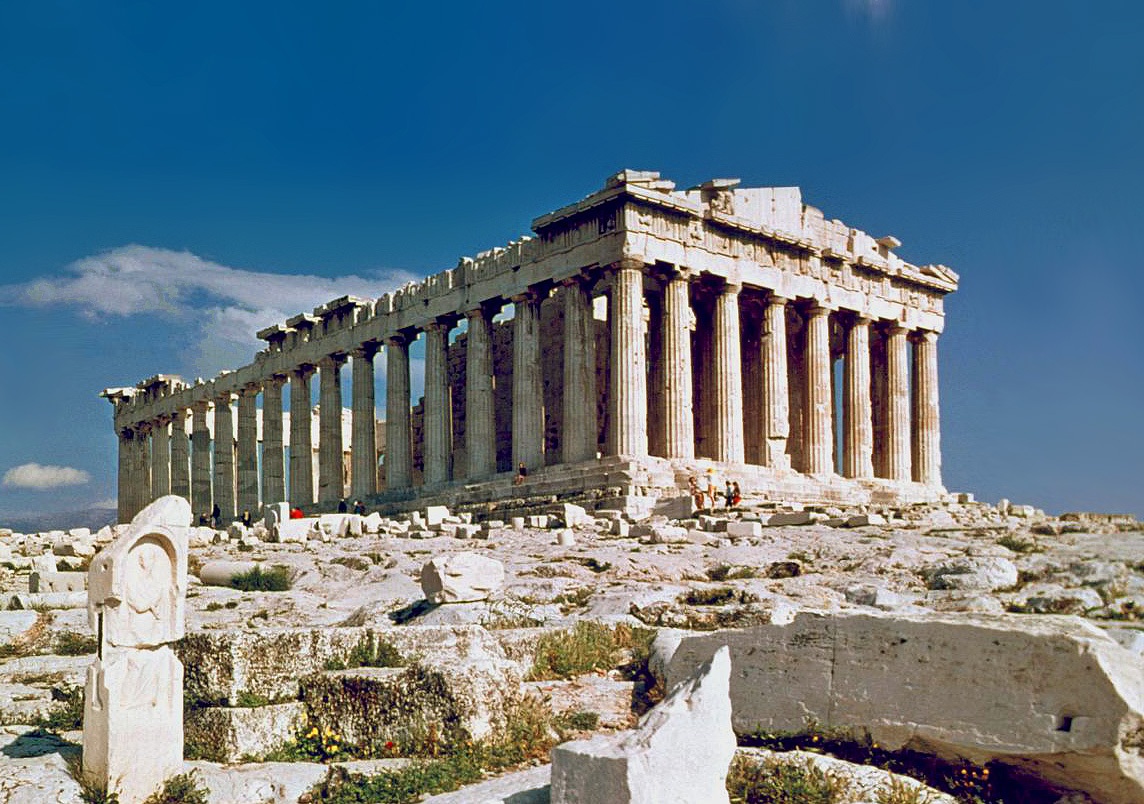
The Parthenon, Athens. Built in fifteen years by a mid-sized city-state that decided to.
What Greece gets back
An industry is only worth public money if the country itself is paid back in more than tax receipts, and this one pays back in people.
A first career without an airport
Greece raised its young people on games, with around four million players across the country, and then watched a decade of graduates leave to build their working lives somewhere else. Studios change the shape of that choice, because they hire designers, artists, programmers and producers straight out of university, pay export-industry salaries in Athens and Thessaloniki, and let the generation that grew up playing start its career at home.
The hardest school of software
Games are the most demanding consumer software there is, combining real-time graphics, simulation, artificial intelligence and live product operations, the discipline of running a game as a service after launch, in a single trade, and every studio functions as a working academy in those skills. People trained in games carry them onward into every other sector that runs on software, which is how a games industry quietly becomes a national technology skill base rather than a single vertical. Poland's games workforce of more than fourteen thousand specialists barely existed fifteen years ago.
What a games generation compounds into
The effects stack as the population of skilled builders grows. Salaries rise as studios compete for people, exits create founders who fund the next wave the way Turkey's already do, a working industry gives the diaspora something concrete to come home to, and the skills seep outward into shipping, tourism, energy and public services. A country that keeps its builders keeps what they build, and the treasury collects the same multiplied return the UK has already published.
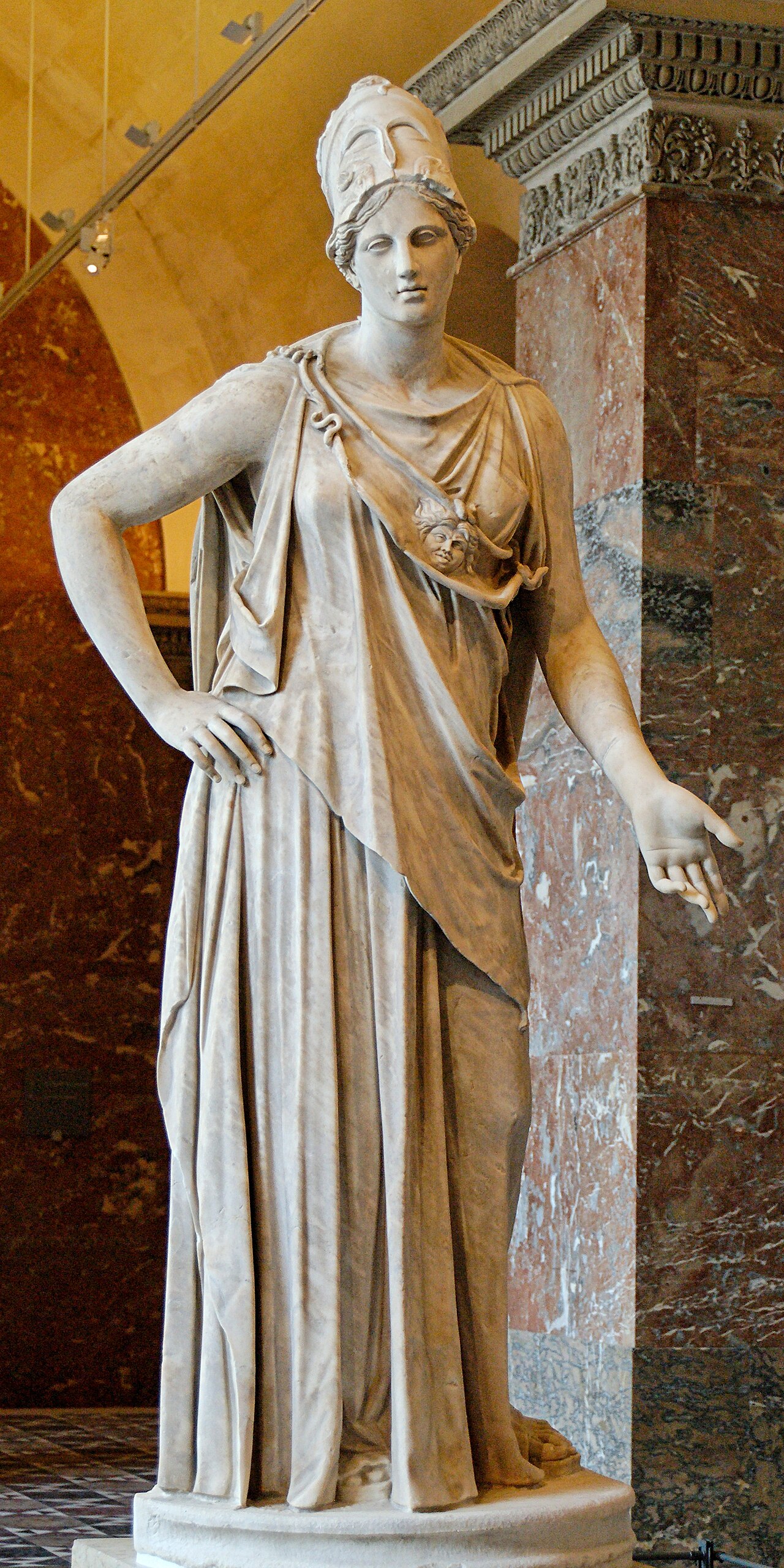
The Mattei Athena, Louvre. The goddess of craft and strategy, which is the whole job description.
What it takes
None of this needs a moonshot, only four levers, each of them already proven by a neighbour and each within reach of a single budget cycle.
And say the quiet part first: the reason the studio count has sat where it sits is not a shortage of craft or of players. It is that three things have never been present at once, production and publishing literacy, pipeline capital, and a single door into the state. Named plainly, that diagnosis turns the levers below from a wish list into a prescription.
Scale the credit
Lift the games incentive from its €1 million cap toward the UK's 34 per cent and Ireland's 32 per cent headline rates, and say it loudly. A credit at that scale is not a cost line, it is the best-performing investment a treasury can make in the creative economy, on the published evidence in the UK's own card above.
Open one door
A studio deciding between Athens and Istanbul should face one office, one form and one answer for incorporation, incentives and hiring. Turkey and Ireland both learned that speed of administration is itself an incentive, and it is the cheapest lever on this list.
Fund the pipeline
Poland's GameINN grants and Finland's early public funding built studios that later paid for themselves many times over. A Greek equivalent, prototype and growth funding drawn from the RRF's digital envelope, would give the studios already on the map a ladder and give returners a reason to found the next hundred.
Teach the business
Greece has craft in abundance and art schools full of it. What the ecosystem lacks is production and publishing literacy, the unglamorous knowledge of scoping, funding rounds and platform deals, the terms on which consoles and stores take their share. Every mature games nation pairs creative education with commercial training, and it is the difference between a scene and an industry.
The Poland line
Studios225
Jobs4,000
Annual exports€350m
If Greece merely matched Poland's games intensity relative to population, the arithmetic sketches out at roughly these three numbers. An illustration rather than a forecast, and worth memorising as one line: Poland did it in fifteen years, starting from less than Greece has today.
Three audiences, one opening
To the government
The pilot light is lit and the evidence from six countries is public. Scale the credit, open the single door, and point a sliver of the RRF's digital billions at an industry that returns fourfold where it is tried. The window is a budget cycle, not a decade. And the first step costs almost nothing: the listening round Chapter III opens with.
To the builders
Forty-four studios is not a weakness, it is the ground floor. Every country on this page started smaller than it looked. The cost base, the talent returning home and the deepest story library in the world are already yours; found the studio, and make the case impossible to ignore.
To the diaspora
You are the industry already, working in London, Berlin, Montreal and Helsinki. In 2023, for the first time in a generation, more Greeks came home than left. A games industry is built precisely from people like you, and nostos has always been the strongest plot in the Greek canon.
Ώρα να παίξουμε
Time to play
Go deeper
Four chapters of sourced evidence behind the case above: what Greece already offers, how talent comes home, what a first year actually looks like, and what the country gets back.